Showing posts with label wine. Show all posts

Monday, July 25, 2022

Portugal’s Alentejo Region - Part 5

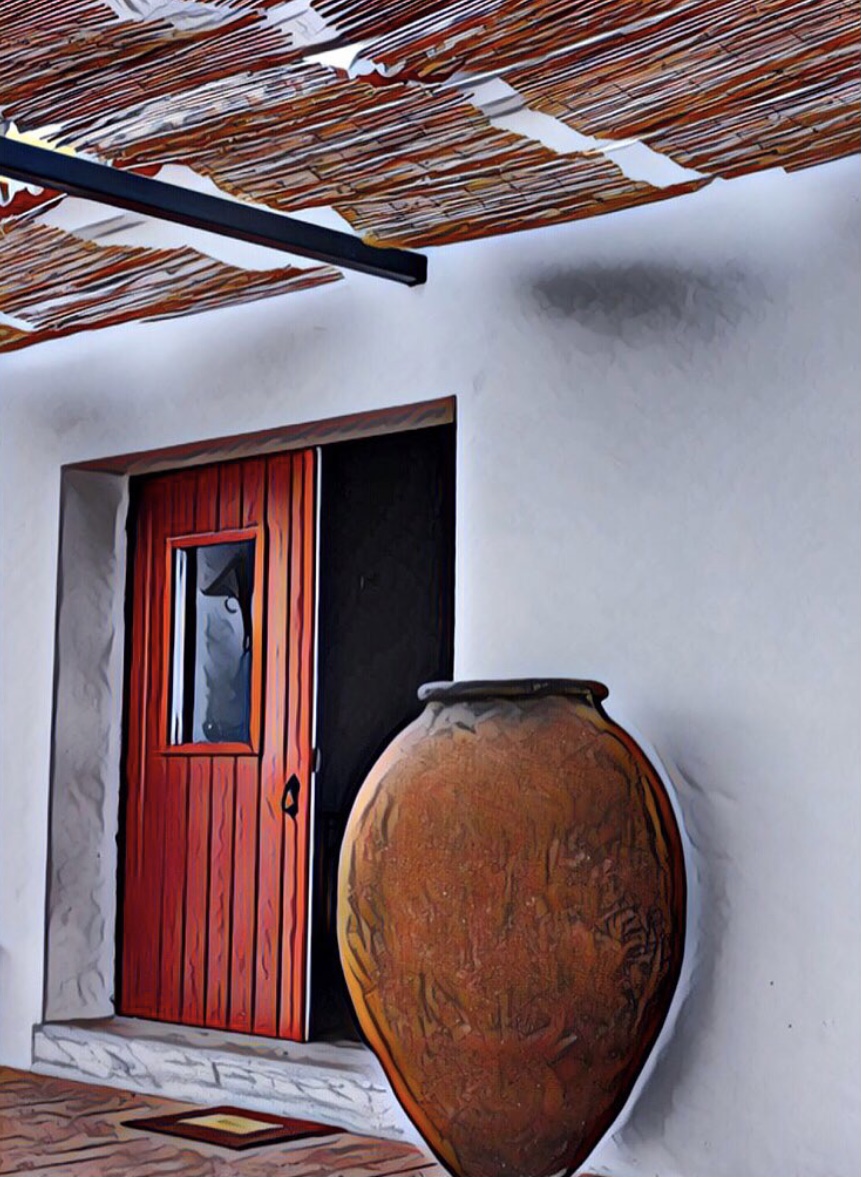
 For an oenophile like me, being able to sample wines produced in clay vessels called amphora was a delight for my palate. In Portugal’s Alentejo region, this method of wine production is thousands of years old, thanks to the Romans and maybe even the Phoenicians before that.


You can’t beat the infinity pool where a table and chairs are set in the shallow end at the Montimerso Skyscape Country House. Whether sitting in one of the poolside lounge chairs or the handful of ultra comfy daybeds nearby, I soaked up the stellar views of the Alqueva, Europe’s largest man-made lake.


While roaming all around the Alentejo, I found the old, gnarled olive trees captivating. Each had a distinctive, stunning personality.


continue reading "Portugal’s Alentejo Region - Part 5"

Sunday, December 30, 2018

Art, Food, Cocktails and Coffee in Kingston, New York

Many of my friends and colleagues assume that I only travel to far-flung locales. In fact, I'm all about discovery, whether it's along an alley I never strolled along in New York City or a neighborhood that's just a day trip away from Manhattan. That's why I decided to take bus to Kingston, New York, a mere two hours away. So close but a town I never had the opportunity to visit. Though I only spent two days, I could've easily have enjoyed the myriad coffee shops, restaurants, bars and street art for far longer. Below are just a few of the art-centric discoveries I made recently in Kingston, a city that's broken up into three sections -- Downtown, Midtown and Uptown -- that together make up a more than two-mile walkable expanse. Among the must-dos: stay at The Forsyth B&B, where the owner, Tamara Ehlin, is warm, welcoming, and can cook and bake up a storm, and present it all in an elegant manner, no less. You never know what will come out of the kitchen. There's no need to look for another accommodation when The Forsyth B&B has availability. To not stay here is to miss out on Tamara's elaborate breakfasts that included apple cider, yogurt with homemade granola and freshly cut pears, cheddar/scallion scones, and sweet potato hash with eggs any style. Another must is dinner at Wilde Beest, a locavore-centric, minimalist eatery with a slim menu that radiates creativity. I'm no fan of kale, yet I ordered the "I'm Kale" appetizer that came with crumbled kale, pickled peaches, golden raisins, fried millet, porcini mushroom powder and cashew dressing. I could've had seconds. And, in Kingston, I may have found my favorite coffee shop of all time: Rough Draft Bar & Books. Sitting at the corner of an intersection where each of the four buildings dates back centuries, this establishment is a coffee shop, bookstore, cafe and wine bar. As a writer who spends my time working in coffee shops, you couldn't have asked for a better, more atmospheric place to spend an hour or a day. I was lucky to grab a stool at the picture window and watch snowflakes fall as I gazed at the holidays lights strung about this area. Finally, I'm very finicky about bars. They can't be too loud or too bright or too pretentious. Crown, a just-opened romantic lounge in a centuries-old stone building, provides a perfect intimate environment to sip a fine wine or a well crafted, seasonal cocktail.


continue reading "Art, Food, Cocktails and Coffee in Kingston, New York"

Monday, November 30, 2015

An Unpretentious New York Wine Tour

I know so many people who can’t be persuaded to sign up for a wine class, a wine tasting or a wine tour. Is it that they abhor wine? Hardly. What they do dislike is the pretentiousness that’s almost inherent in any wine event. Isn’t it possible to enjoy fine wines in an upscale venue, learn enough to be comfortable when chatting with a sommelier in a restaurant or when selecting wine in a shop, and also garner enough practical knowledge to surprise your family and friends next time you pop a cork at home, all without a snooty air? The answer is yes, yes and yes, thanks to City Wine Tours

I signed up for their West Village tour along with 11 other people -- this intimate number of wine lovers is the max on any of their tours. Some of the participants received the tour as a gift, others saw it as a way to share two enjoyable hours on a Saturday afternoon with their siblings, spouse or friends. Sarah, our gregarious wine ambassador, met us at A.O.C. L’aile ou la Cuisse, a charming French bistro. (She’s worked in the wine industry for 10 years, including in sales as a sommelier, and as a wine writer for Martha Stewart.) Instead of just going around the table with the usual introductions, Sarah asked us to describe how we like our coffee. The responses, ranging from black, no sugar to soy lattes, offered a window into our palate. “We’re talking about tannins, body, and flavor preferences that apply to both coffee and wine,” said Sarah.

And, in case you’ve always been confused how to evaluate a wine, Sarah gave us her “foolproof” 4S method: See, Swirl, Sniff and Sip. “It’s about getting all your senses involved," she said.

We started with a sparkling wine, Ammonite Cremant de Loire, Alexandre Monmousseau, as a palate cleanser to wake up the tongue. If you like Champagne but prefer not to pay premium Champagne prices, this wine, like Cava from Spain, is made using a similar method, making it a good value. (The grape is a Chenin Blanc that grows well in South Africa also.) Then we noticed the size of the bubbles erupting in the glass. Sarah explains that the smaller the size, the higher the quality.

Next up was the Domaine Boyt Geyl Pinot d'Alsace 2012, a white from Alsace with pinot blanc grapes. Sarah directed us to the color and clarity -- it was clear and pale; with age a white wine darkens. We stared at the “legs” streaming down the side of the glass. If it crawls, it tells you about the body of the wine, the thickness and the way it feels in your mouth. This one was medium bodied.

We learned that swirling has a purpose; it brings oxygen into the wine. The oxygen releases compounds that, if you sniff after swirling, boost the aroma profile. “So much of the flavor experience is aroma. Go to the farmer’s market to train your senses,” said Sarah. That way, with time, you can more readily identify and describe the scents inhabiting your wine of choice. Some wines give off a lot of aroma. This one was not very aromatic.

Where many would-be oenophiles stammer is when it comes to describing the wine’s flavor. “Fruit flavors are in almost every wine,” Sarah said. This wine had granny smith and some floral notes. By swishing the wine around your mouth, you get an indication of the texture. With this one, you get a medium heavy feel in your mouth.

Sarah was very open to questions. When one member of our group asked about decanting, Sarah told us that delicate wines can’t handle aggressive decanting. But, more important than decanting is the wine’s temperature. “Most whites are served too cold, and reds served too warm,” said Sarah. You can drink reds at 55°-60° F. “Let a white sit outside the fridge for 15 minutes so it warms up a bit,” she suggested. And if a red is too powerful, chill it. Temperature is all important, so it’s no wonder that the stemmed glass keeps your body heat away from the wine.

Then we strolled a few minutes to Ayza Wine and Chocolate Bar, a contemporary venue with light pouring through multiple windows. Two tempting truffles -- one white and one dark chocolate -- awaited each of us. Since I’m a chocoholic, this was, by far, my favorite stop where we sampled three well-crafted wines. The first was Astica Torrontes 2014, an Argentinian white that was fresh, crisp and aromatic with tropical notes. Sarah explained that people are often confused, thinking a fruity wine is inherently sweet. On the contrary, this wine was bone dry but with bright fruit. We took a bite of the white chocolate truffle and chased it with this wine. Heavenly! (More chocolate, please.) This low alcohol wine -- 12.5% -- works well with spicy food as well as fish. “You don’t drink a high alcohol wine with spicy food; it would overwhelm you,” explained Sarah.

We paired the dark chocolate with a red, Ayza Garnacha 2012, a grenache from Calayuna, Spain. Grenache is chocolate friendly, velvety and fruit driven. “Juicy and ripe, with a little spice at the end, it’s like a chocolate covered cherry when you chase the chocolate truffle with this wine,” said Sarah. Pairing the right food with the right wine enhances both.

Last, was the dessert wine, Alasia Moscato d'Asti 2013 from North Italy. This was a delightful wine -- it worked well with both the white and dark truffles -- that had a refreshing blend of flavors: apricot, rose petals, and lychee. Many members of our group at first looked afraid to try the dessert wine, concerned it would be sickeningly sweet. That was hardly the case. In fact, several of us decided that this could be our go-to dessert wine.

Our last stop was Jones Street Wine, a wee, local and very informal wine shop. The owner, Joel Zighelboim, curates the petite wine selection: reds lining one wall and whites on the other. Above each bottle hang detailed tasting notes on clipboards. Since this was the weekend before Thanksgiving, we sipped a wine from Rioja - Crianza 2011 Fernandez Gomez that works well with turkey. It’s aged for a year in oak and another year in the bottle, a process that reduces the tannins. The tempranillo grape gives the wine its vibrancy, offering a red fruit flavor with a little tartness. vibrant, red fruit. In fact, it’s lively, just like cranberry sauce, said Sarah. But it’s also got almost herbaceous notes -- kind of like a “Thanksgivingy” flavor. Sarah likes versatile wines, like this one, for Thanksgiving, because most menus are laden with myriad different foods with flavors spanning a vast spectrum. 

City Wine Tours is kind enough to offer my readers a discount on their tours that, if you love wine, you should take advantage off. Get15% off your next purchase with coupon code "Travelauthority15". More info at: www.citywinetours.com.



continue reading "An Unpretentious New York Wine Tour"

Thursday, May 28, 2015

An Innovative Portuguese Restaurant In New York City


    Chef George Mendes of Aldea fame, the Michelin-starred Portuguese restaurant in New York City, recently opened Lupulo -- the name translates to "hops" in Portuguese -- a restaurant distinctly different in terms of its design and menu concept. While Aldea is fine dining and more traditional cuisine of Mendes' homeland, Lupulo has a  contemporary decor with traditional touches, and the same can be said for the cuisine.

    An immense oval bar sits smack in the middle of this expansive space that's suffused with natural light. Portuguese blue and white tiles line one wall while heavy maritime-type ropes act as vertical room dividers. An open, non chaotic kitchen takes up one entire wall.

    This gastropub  specializes in dishes that are an homage to Portuguese, but with a welcome creative twist. A mackerel spread had none of the expected bold fishy flavor. Instead, the kaffir lime, Vinho Verde wine, olive oil and a  touch of sea  salt lend a complex but mild flavor. The bowl of mackerel spread is ringed by ultra thin pieces of toast. This dish is one of several tasty petiscos (Portuguese tapas or small dishes) that include the light and flavorful grilled green asparagus with a dollop of dried sea urchin, plus sorrel and walnuts.

    For main courses -- though we shared everything -- I recommend the green peas made with diced chorizo, and topped with sunnyside up eggs along with parsley,Vinho Verde and kaffir lime. (The latter two appear in a number of dishes and, I must say that I never tired of the tanginess they gave each dish.). Another creative entree is the red snapper crudo, served in a bowl of coconut milk and kaffir lime broth, made spicy thanks to serrano peppers plus benne seeds.

    Unlike most people who love Portugal's traditional egg-based desserts, I find them cloyingly sweet. Thankfully, Lupulo's desserts are Portugal made modern. We opted for the chocolate "salami" sprinkled with sweet chocolate powder, and served with a side of olive oil ice cream.

    Of course, because Lupulo is named for the Portuguese word for "hops," it's no wonder that you'll find a wealth of craft beers, including the Sagres Pilsner and varieties from Japan, Belgium and Germany. Lupulo's wine menu features only wines from Portugal including the region I'm most fond of: the Alentejo. 


continue reading "An Innovative Portuguese Restaurant In New York City"

Sunday, May 25, 2014

Luxembourg In Pictures

The tapestry of Luxembourg City undulates up and down the hills and valleys that bedeck the small country's capital. Dramatic defensive walls left over from the 17th century twist and turn over this landscape that melds together remnants of antiquity as well as the contemporary. Beyond the City of Luxembourg, the country's pastoral setting includes vast acreage in the Moselle Valley devoted to grape growing. My short YouTube video slideshow presents a short snapshot of my treasured finds from my trip to Luxembourg.


continue reading "Luxembourg In Pictures"

Friday, May 11, 2012

Colombia Beyond the Myths

When I tell friends I'm about to take off on a new adventure, if I happen to be traveling to Hawaii, the Caribbean, Spain, Chile or dozens of other places around the world, often the response is, "Oh, can you take me in your backpack?" That's not the response I got when I told friends and colleagues that I was venturing to Colombia. Instead, I heard, "Oh, be careful." "Don't go out at night." "You're not going alone, are you?" "Wow. Colombia. Well, email me that you're safe."


Even when I returned and told of the expansive nature preserves, the hot nightlife in Bogota, the fine restaurants with wines from around the world, the boutique hotels with spas, and quaint colonial villages paved with cobblestones, the responses were, "Sounds nice. Glad you didn't get kidnapped." Poor Colombia. There's so much beauty and culture that most people are missing because they continue to believe that terrorists, thieves, drug lords and kidnappers are lurking around every corner.


 My article for the Huffington Post describes 20 of the treasures I found on my recent trip to Colombia. And, as we all know, it's the people you encounter that can make or break a trip. In Colombia, I was surprised to find so many people who were delighted that someone from New York came all the way to their country.


And, if you don't feel like visiting Colombia alone, then check out Voyage Colombia, a company I used to help me plan this trip. They'll set up your itinerary based on your interests, whether it's the culinary scene or more nature based, and also provide an English-speaking guide and/or a driver that will be flexible, informative, helpful and absolutely interested that you enjoy your stay in Colombia.


continue reading "Colombia Beyond the Myths"

Thursday, December 29, 2011

Things You Didn't Know About Romania

Some countries, like Romania, are just ridden with misconceptions. In fact, once I told my colleagues and friends that I would be spending a week in this Eastern European country, I was hard pressed to find many positive comments.


More typically, I heard: "Why are you going there?" and "You better be careful of those gypsies." But, like so many of my travels, I was determined to do some myth busting. And this included looking for the Romania beyond the signature sights of fortified churches, painted monasteries, and anything to do with Dracula.


My article for the Huffington Post focuses in on Romania's hidden treasures.
continue reading "Things You Didn't Know About Romania"

Friday, October 1, 2010

Making the Most in Malta

As far as travel styles go, I'm the compulsive and meticulous planner who likes to pack in as many --usually off-the-beaten-track or, at least, less touristy -- experiences as possible into each and every day of my trip. And finding a bespoke tour operator who listens to the needs of the client and has an insider knowledge of the destination makes the planning all the easier.

I don't always seek out this help, but, for a number of logistic reasons, I did in the case of Malta, where I wanted to go beyond the many historic monuments that occupy so much tourist attention. I was lucky when Jessica Colley contacted me on twitter and gave me a heads up on Trevor Zahar and Natasha Borg, co-owners of Culture3Sixty. No matter your interest, whether it’s focused on diving, sailing or other sports; luxury oriented with visits to spas; or more nature based, they can dig up the perfect locales, as they did for me.


This is a micro sampling of what Culture3Sixty arranged for me:

• tours of wineries for tastings and tours, such as the Meridiana Wine Estate, which is planted on the original British military airfield. In fact the original control tower still stands, but now it houses a laboratory. Designed as an old Malta country residence, the winery allowed me to taste a crisp 2009 Chardonnay, and a bright berry Cabernet and Merlot blend with just a hint of oak.

• visits to gardens, such as the San Anton Gardens that were originally laid out by Grand Master Antoine de Paule of the Knights of Malta as his private residence. (As I mentioned in a previous post, so much for the vows of poverty.) These gardens are so lavish and they were such the talk of the town at that time that they’re said to have inspired Versailles. With tinkling fountains, elegant statuary, foliage from around the world and peacocks strutting about, San Anton is a must-see for garden lovers.

• restaurant reservations, such as Fra Giuseppe in the town of Balzan. Housed in an 18th century building, the restaurant stocks some 200 bottles of wine from all over the world. Sitting in a wee stone room where the walls are hung with contemporary paintings, I sampled ftira, a ring-shaped Maltese bread that’s somewhat crunchy with a soft interior and filled with sun-dried tomatoes, olives and capers.

Whether venturing down narrow cobbled lanes in the capital city of Valletta or wandering around the less visited locales in the central part of the country, you'll find Malta restaurants that radiate authenticity.
continue reading "Making the Most in Malta"

Tuesday, February 23, 2010

Visiting Portugal's Dynamic Wine Region

One hour from Guimaraes, a quaint town dating to the 10th century that's seen as the cradle of Portugal's identity and is preparing to be European Cultural Capital 2012, I had one of my most unique and delightful wine experiences. I was spending several days in the country's Vinho Verde region, the northwest sector renown for its fresh, aromatic, light citrus-tinged wines. This region, one of Portugal's oldest, is named not, as often thought, for the youth of its wines, but rather for the verdant landscape carpeting this land that's blessed with warm summers, cool winters and plenty of rain -- perfect conditions for producing some fine varietals. Curiously, the vines grow along wires and arbors, lending a picturesque quality to the terroir. The reason, however, is a practical one: Originally it was a way to efficiently plant the land and now the aerial growth allows for plenty of sun to rain down upon the leaves while keeping the grapes far from standing water which would breed mildew.


A mighty family house hovered in the background as Vasco Croft, the congenial and knowledgeable wine maker and owner of Afros Wine, greeted us. From this hill top retreat, the vineyards growing Loureiro and Vinhau grapes, used to make white and red wines, respectively, are spread before us. Piercing the idyllic valley far below is the tower of a parish church and, beyond, gently rolling hills.

The tour of the property started out quite ordinary as Vasco pointed out the stone dwelling that's been in the family since the 17th century and the stately trees that his great grandmother planted -- some are more than 100 years old. (But wine production in this region goes way back to Roman times.)

Then the conversation became decidedly more unique as Vasco showed us many of the elements involved in the production of biodynamic wines. Though there are many people who still hold that this green methodology that goes far beyond simply producing an organic product is hocum or some sort of magic, it's the results that count. (But I'll get to that later.)

The process involves considering a host of cosmic factors -- from the phases of the moon to ambient magnetic radiation -- that can affect the health of the vines. Here, the entire eco-system is seen as playing a core role in grape agriculture. Sure, there are some production aspects that, to the traditional wine producer, seem certainly curious. Vasco told us that he plants and harvests according the phases of the mood; places cow manure in cows' horns that are buried underground to produce a humus that's used in minute quantities; and uses a dynamizer machine that sequentially rotates clockwise and then counterclockwise to mix up various components, such as crushed quartz and dried flowers that help build up the quality of the soil.

He even showed us a tinkling organic-shaped waterfall he had built that optimizes the rhythmic quality of the water. (Another key biodynamic principle.) Vasco keeps bee hives on the property for pollination purposes, uses tea tree oil to prevent mildew on the grapes, and sprays them with silica to maximize photosynthesis.

It's all quite complicated and precise, but it obviously works. I sampled five wines that were some of the best I've tasted during my many visits to Portugal. These wines were transparent, vibrant and full of life, just like the wine producer, Vasco. My favorite was the elegant, light citrus-toned 2007 sparkling white made with 100% Loureiro. Vasco told me that his 2008 Loureiro was recently voted "most ethical wine" by the Independent. I also had the opportunity to taste a couple of the 2009 vintage that were still unlabelled. The 2009 Loureiro had grapefruit notes while the 2009 Vinhao (a red) had ripe tannins and plenty of licorice notes. I would've loved to have packed away all five in my backpack. Sadly there was no room.

Sure, it's hard to explain how these unorthodox methods work. But Vasco is producing wines that maximally reflect the region's terroir. I'd be delighted to visit this vineyard and taste any of these wines again. Anyone who is interested in a wine tasting at this quinta needs to call to make a reservation in the summer only.
continue reading "Visiting Portugal's Dynamic Wine Region"

Friday, October 23, 2009

Portugal Travel Tips

When people find out that I've visited Portugal six times in the past three years, they often wonder what is so enticing about this Western European country. So many people that I know who travel all over the world somehow have missed up on visiting Portugal. And, those who do make it to Portuguese shores, end up just spending a day or so in Lisbon, the capital.
Emily S. Gerson wanted to know what I love about Portugal and how I'd advise others to enjoy one of my favorite countries. Her interview with me appears on her blog Maiden Voyage. There are plenty of tips that can help you plan your itinerary along with hidden treasures galore. Whether you're an oenophile or a gastronome, someone who enjoys hiking in leafy forests or delights in a sense of history, you'll find it in Portugal.
continue reading "Portugal Travel Tips"

Sunday, April 19, 2009

Walking Through California's Wine Country

Of course California's Napa Valley is synonymous with wines. But this picturesque land blanketed by vineyards is also dotted with leafy parks, perfect for human powered activities, namely hiking and walking. Whether you're an oenophile or a foodie, next time you're visiting this placid valley, pay a visit to any of the following for a whole different take on the wine country:

• Not far from downtown Calistoga, the Bothe-Napa Valley State Park has some lovely but rugged paths, including the Redwood and Ritchey Canyon Trails where you'll come face to face with towering redwoods and Douglas fir trees. With more than 10 miles of trails, you could easily spend the day here or make it just a short visit by passing the time strolling along the creek. This park is one of my favorite picnic spots in the area.


• Not only can you check out a grist mill from the 1840s at the Bale Grist Mill State Historic Park but you can also walk from here to the Bothe-Napa Valley State Park. (It's only two miles.) The mill building is only open on weekends but it provides you with insights into an activity -- the milling of corn and wheat -- that was important to the community until it ended in the early 1900s.

• The Robert Lewis Stevenson State Park marks the spot where the author spent his honeymoon in 1880. I love the dense woodland of Pondersona pine, black oak and Douglas that the shady Stevenson Memorial Trail snakes through. Continue hiking farther uphill and you'll get a dramatic viewpoint of the entire Napa Valley, Mt. Diablo and the snowy Sierra Nevada mountains. If you've got the energy, you can continue climbing for several more miles to the top of Mount St. Helena for some supreme viewpoints of the surrounding peaks.

• What could be stranger than getting a fascinataing lesson in geology in the wine country? The Petrified Forest, the only such redwood forest in the world, allows you to take a self-guided walk to examine the curious gray-white specimens. (The Queen tree is said to have been 2,000 years old when it was buried.) In case you're wondering how the trees came to become petrified -- they were buried by volcanic ash more than 3 million years ago. But they weren't discovered until the 19th century. Visit on a Sunday and you'll be treated to a naturalist-led walk on the Meadow Trail where you'll learn more about petrification.
continue reading "Walking Through California's Wine Country"

Thursday, April 9, 2009

In Israel, Even Science Is Fun

You may not know it but I'm a bit of a science geek. No wonder, considering I was originally trained as a biologist. And I found plenty in Israel that appealed to the geek in me. All of the venues below, except the first, are hours outside of Tel Aviv but well worth the trek whether you are or are not fascinated by science.

1. Imagine transforming a garbage dump into an eco-friendly landscape. That's what they've done at Hiriya Garbage Mountain on the outskirts of Tel Aviv. The mountain rose to its present almost 300-foot height because of some 16 million tons of garbage dumped . If you're part of a group, they'll give you a tour that includes driving to the top of the mountain where you've got amazing panaoramic of downtown Tel Aviv and its outskirts. But more amazing is the visitor's center where everything is recycled. A boldly-colored central desk, chairs, pillows, ceiling ornaments, some resembling giant flowers, are all recycled. The desk is made of plastic bottles, the chairs are constructed of car tire inner tubes, cans, and old billboard materials. Another ceiling fixture is made of found objects that include toys, a guitar and toilet seats which all seem to work together. This center for environmental education is fascinating because nothing looks like it's been recycled. And from a design perspective, it's all engaging. Even more interesting is the fact that they've developed a pilot project -- the first in the world -- to produce electricity from organic waste. Ultimately there will be a leafy park with a large network of biking and walking paths.

2. The Weizmann Institute of Science will attract anyone, even those who are non-scientists and children alike. This research institution that also has graduate study is doing some very cool research in nano-technology, cancer and alternative energies. If you make a reservation, you can do a self-guided walk through the lush campus -- even if you didn't want to check out the science, the spacious campus is a joy to walk through. On the campus you'll find multi-media exhibits dealing with everything from robotics to medical discoveries, the Weizmann house that's now a museums, and the open-air interactive museum of sorts referred to as the Clore Garden of Science you'll have plenty to keep your neurons occupied all day. Make sure to arrange in advance for the tour of the Clore Garden in English. Adults and children alike will delight in getting a whole new perspective on how waves, bubbled and rainbows form.

3. The Ben-Gurion University of the Negev -- The Jacob Blaustein Institutes for Desert Research is located in the Negev, a dry triangular parcel of land that gets the least amount of water in the entire country. So no surprise that they're doing quite a bit of water as well as solar research. (They're hoping to tackle all of Israel's water needs by 2020 by technology that efficiently takes the salt out of water.) Make a reservation and you can not only check out the facilities -- they've got the worlds largest solar dish and it follows the sun and could power some 25 homes -- but you can chat up with the grad students.

4. The Morad Winery is another real surprise because this family-owned business makes "wine" -- really sicar -- by fermenting just about any fruit, vegetable and herb. That is, except for garlic and hot peppers. I tasted eight different varieties, but by far my favorites were the grapefruit, passion fruit and almond. Yes, you heard right. The Morad family makes a liquor from almonds. None of these were overly sweet but they were plenty flavorful. They've got liquor that comes in 45-some flavors. Plus, aside from the tastings, you'll meet one or more members of the family, watch a fascinating video to see how the older Morad got into this business and how the fermentation occurs, and you can also see different stages of the fermentation process yourself.

5. You'll learn plenty about birds and bird migration by spending some time at the Agamon Hula Valley Nature Reserve. There are several ways of visiting this vast green farmland that was once a swamp, which was drained and then rewatered to attract thousands of different birds that winter here and fly over on their way to either Africa or Europe, depending on the season. My favorite way of visiting is to take one of the bicycles and pedal along the almost seven-mile paved loop trail keeping your eyes peels for cranes, pelicans, ibis and other birds. But, if you want to navigate to addition viewpoints, then you'll have to board a tractor-driven wagon -- because these more "hidden" areas are off limits to everyone else. The reserve also hosts night visits where you may spy owls and fruit bats as well as sunrise visits when you might be treated to some beautiful bird songs. You definitely don't have to be a bird watcher to appreciate this place. Just come with a love of nature.
continue reading "In Israel, Even Science Is Fun"

Wednesday, April 1, 2009

Chilling Out in Tel Aviv


I promised more postings about my recent trip to Israel. These are some of the venues where I chilled out from my usual high-adrenalin wanderings:

• The restaurant at the boutique Hotel Montefiore is a must dinner stop. After all, this is the place to see and be seen. It seems all of the top designers and architects and others I spoke with had dined here. During my one-week visit, I visited here twice and I saw that the liveliest spot to dine is the bar, rather than the adjacent dining room. Here I sat alone beside a couple celebrating the wife's 30th birthday. But I didn't feel alone for long. After ordering several appetizers -- the shrimp salad with cellophane noodles, and the Four Nams, small egg rolls that you wrap in lettuce and mint leaves -- they soon ordered vodka shots, poured some for me and invited me in several toasts. You gotta love Israel -- this never happened to me in New York City. The restaurant offers a fusion Vietnamese menu and, though I didn't find every dish memorable, the atmosphere definitely was.

• Down the street from Hotel Montefiore, a new wine bar, referred to simply as The Wine Bar, is set on a corner of Nachalat Binyamin Street at 15 Montefiore Street. This two-floor glass ensemble provides an intimate venue on the top floor where you can snuggle with your date at the solo table while looking out at the large glass windows. I sat at the bar on the ground floor sipping a wonderful Chardonnay from the Golan Heights -- an area known for its wines. Though most of the varieties are from Israel, you can also find wines from Chile, France, Australia and Spain. They also serve food: I vote for the ravioli stuffed with lamb and garlic and the excellent creme brulee with pomegranate.

• On the old Tel Aviv Port waterfront which has been renovated into a shopping, dining, nightlife venue. Among the many options, I chose to hang out at ultra-laid back Shalvata. This restaurant/bar is most noted for its outdoor patio complete with thatch umbrellas and sofas with plenty of colorful throw pillows. I wish the weather was cooperative because I would've hung out staring at the sea. But with the cool weather, I retreated to the spacious interior where a palm tree pierces the reed ceiling, a wood burning stove sits in the middle of the space and the bartenders are plenty willing to chat.

• Also on the old Tel Aviv Port, the Coola Spa is a hidden gem for women. This women's only day spa is so much more. It's a place where they offer everything from belly dancing classes to movement therapy. Sited on the waterfront, coming here on a sunny day allows you to sit outside on a lounge chair and enjoy the sea views. Their treatments are plenty varied, including Japanese, Chinese, Hawaiian and Indian massages as well as a even a Tibetan treatment. Chocolate lovers, like myself, can opt for a chocolate treatment. They're really got something for every woman, including those who are pregnant. It's really more like a regenerative day retreat.
• In Jaffa, just south of Tel Aviv's center, I found a restaurant with the most wonderful location. Babai is set right on a windswept seafront with nothing to impede the ocean-front views. Sitting beside the tall windows, I wanted something light so I asked if I could just have a mix of dishes, a little humus, baba ganoush, that sort of thing. Wonderfully, 15 small individual plates arrived, each with a tasty salad: baba ganoush, lentils with onions, curried cabbage, tomatoes with garlic, tabouli and much more. Plus, warm pita bread. These simple but varied dishes and a view that can't be beat makes this a winning locale.
continue reading "Chilling Out in Tel Aviv"

Sunday, March 8, 2009

Israel's Wonderful Wine Scene

Think Israeli wines and what first comes to mind? Probably a sickly sweet Manachevitz. But you'd be completely wrong, because Israel is noted for its very sophisticated viticulture. In fact, the renowned wine critic, Robert Parker, has given some very high marks to some Israeli wines.

One of my favorite sources of everything wine-wise in the country is the Israeli Wine Blog. You'll find plenty of information in the wineries, festivals, expos, wine tastings and much more. Another great information source I love is Rogov's Guide to Israeli Wines. This book is updated every year and is almost a bible for oenophiles. I picked up a copy when I was in Israel, though you can easily buy it through Amazon.

A more handson way to experience Israel's varied wine offerings is to attend the annual Israel Wine Festival held each summer at Jerusalem's Israel Museum in the unique Isamu Noguchi-designed sculpture garden.

During the evening, wine lovers sample vintages from at least 30 different Israeli wineries, wander among the illuminated works of Henry Moore, Roden and other sculptors, while listening to live jazz and nibbling on artisanal, cheeses, hummus and other delectables.

Of the country's 250-some producers, the Golan Heights Winery has been very influential to the country's new wine generation. It offers regular tours and tastings where you might be able to sample their award-winning Yarden Katzrin Chardonnay 2004.

The Ramot Naftali Winery is a boutique property that still harvests grapes by hand. Clearly the operation is on a much smaller, but it's no less noteworthy, scale. Located in the Upper Galilee and a half hour from the Golan Heights, this family-run winery is celebrated for its reds, such as its gold medal-winning Cabernet Sauvignon, that are all aged in French oak barrels.

continue reading "Israel's Wonderful Wine Scene"

Monday, February 2, 2009

10 Don't Miss Activities in Madeira


With it's rugged volcanic peaks, exotic flowers, a network of levadas or level walking paths and a wild virgin forest dating back millions of years, it's no wonder that visitors to Madeira, a small archipelago far out in the Atlantic, describe it as a tiny piece of paradise. Here are 10 of my favorite activities:

1. Take the cable car that sweeps above Funchal's ravine-like valley to the Monte Palace Tropical Garden where the wooded paths are lined with elaborate Portuguese tile work, 17th century coats of arms, ancient stone window frames and many other surprises.

2. In Monte, visitors, seated in a wicker sofa atop wood runners, experience a hair-raising toboggan ride down hairpin turns along steep, narrow cobblestone streets with two men steering and braking using their thick boots

3. The scenic road that twists and turns to the summit of Pico do Areeiro runs through a volcanic land covered in rare flora and provides unparalleled views of valleys laced with streams. It's also a jumping off point for short walks to see the central mountain range rising from a thick cloud cover.

4. Madeira is most noted for its levadas, a network of almost 1,000 miles of irrigation channels that are bordered by a level but often precipitous walking path. Nonetheless, though the reputation of the island's levadas often turn away acrophobic visitors, there are plenty of lovely levada walks coursing through Madeira's unique environment without the fear factor. The walk from Ribeira Frio to Portelo takes walkers through a protected laurisilva forest, Madeira's native woodland that's so precious it's designated a UNESCO World Heritage site

5. Drive to Curral das Freiras, a village isolated by deep abysses and thick woodland has been a haven for 16th century nuns who fled a local convent when pirates ransacked Funchal. At the Nuns's Valley restaurant you can sample the homemade chestnut or almond cakes.

6. Try a glass of poncha -- considered a popular Madeira drink made of sugar cane brandy plus honey and lemon -- at Victor's Bar, a rural restaurant near a trout hatchery with basalt stone pools.

7. Once you've checked out the cozy A-frame thatched cottages in the village of Santana you can have lunch at Quinta do Furao where a wrap-around porch provides views of rugged sea cliffs and giant offshore rocks. When I dined here for lunch, I enjoyed grilled limpets, fresh cheese and bread baked in a wood oven.

8. Visit Funchal's fish market where you can check out the scabbard fish, an island delicacy that looks fierce with a large eel-like body, bulbous eyes and sharp jagged teeth.

9. Whether it's the English-style and tropical gardens, 18-hole par 72 golf course (Perched at 500 feet above sea level, the clubhouse provides panoramic views of the Bay of Funchal), or Casa Velha Do Palheiro, a five-star country house, you’ll find plenty to do at the Palheiro Estate that dates back to the 1800s. This former hunting lodge provides guests with the use of the private yacht. Plus you won’t want to miss a meal at their restaurant, considered one of the island’s best with some select Portuguese wines available. When I was there, they served: pigeon and foie gras with gingered sweet potato puree; blue lobster and avocado with mango in a rice paper wrap. You can have high tea with scones in the afternoon or stop by the teahouse for homemade pastries.

10. Treat yourself at the hilltop Zen-inspired Choupana Hills Resort and Spa. Here, guests are pampered in a tranquil property with almost three dozen bungalows made of teak and basalt stone. (The suites are my preference with their canopy beds and wraparound terraces.) Light streams into the interior, thanks to walls of windows overlooking the lush gardens or the Bay of Funchal far below. Here, you can have aromatherapy, hot stone massage or an algae wrap and soon Reiki treatments.

continue reading "10 Don't Miss Activities in Madeira"

Tuesday, January 13, 2009

Tallinn, A Trendy Medieval City


On my recent trip to Tallinn, the medieval capital city of Estonia, I found that it straddles a fine line between quaint and trendy. Its old quarter is a UNESCO World Heritage Site with ancient wall fortifications and a multitude of steeples piercing the skyline. Yet, this city, which will be European Cultural Capital 2011, is hardly stuck in the dark ages. In fact, quite the opposite. After all, Tallinn is home to Skype, the internet-based communications program.


Trendy restaurants, cafes, wine bars, galleries and boutique emporia can be found down many a cobbled lane. Last spring, an Asian fusion restaurant, Chedi, opened. Grilled Chilean sea bass with Chinese honey and stir-fried venison are a couple of the dishes served in this intimate space. The Gloria Wine Bar with its warren of cozy stone rooms and a fourth-floor attic that's home to Veini Pooning are two of
Tallinn's most intimate bars to sample wine. One of the most curiously-named restaurants, Ö, meaning "island" in Swedish, serves up Euro cuisine that's heavy on Scandinavian and Estonian products. Diners sit among images of Rubens hung on the walls. Past tall cast iron gates, another restaurant, Egoist, is housed in a centuries-old mansion that's detailed with antiques galore.


Tallinn has no shortage of cozy cafes with fab pastries, including Chocolaterie, Kohvicum and Bonaparte. I particularly loved the tranquil outside courtyard at the former that serves creamy homemade truffles, including those filled with passion fruit and chiles. Bonaparte has a comfortable subdued interior where you enter through a rustic tall wooden door reminiscent of what you might find in a castle -- after all, the building dates to the late 13th century -- yet contemporary art hang on the walls. Here I devoured a very tasty red currant tart -- there are so many yummy pastries it's hard to choose.


The city's relatively new vanguard institution is the modernist
Kamu Museum that's built into a limestone cliff and displays contemporary and classic art. You could spend the whole afternoon wandering the sun-filled interior. The Estonian Museum of Applied Art and Design didn't get a lot of tourist traffic when I was there but it's definitely worth a visit to see the works (from furniture to porcelain) of Estonian designers that they promote. More locally produced works can be found at Nu Nordik, a small shop chock full of creative, whimsical items, from T-shirts and pillows to jewelry and pottery. Reet Aus is an eco designer-owned shop selling very wearable, comfortable women's clothing.

On the accommodation front, these are my two picks: Three 14th century merchant homes serve as the home of Three Sisters, a boutique hotel that mixes old and new where no room is alike. An old wooden staircase spirals up to the rooms where some have claw foot tubs, four-poster beds and centuries-old wood beams. After dinner, a visit to their cellar wine bar makes a fine way to end the evening. Another accommodation, the Hotel Telegraaf is aptly named for the 19th century telegraph building where it's housed. Their spa offers Tibetan massage as well as wraps using a Balinese recipe.

continue reading "Tallinn, A Trendy Medieval City"

Saturday, December 13, 2008

new restaurants in Portugal


I just spent a weekend in Lisbon and ate at two new and very fab restaurants: Bocca near the Parque Eduardo VII in the city center area, and Arola in nearby Sintra at the Penha Longa Hotel & Golf Resort. They are both must-eat places. Bocca serves up a completely different menu at lunch and dinner and it's the dinner menu that is the most amazing. (Lunch is a more casual affair, without the multi-course tasting menu.) The young chef, Alexandre Silva, creates delicacies that look like mini works of art. He firmly takes his inspiration from traditional Portuguese recipes and then he turns them on their heads. Even if you get the tasting menu, try to get someone at your table to also order the cheese sampler -- it includes varieties from some of the country's major cheese regions -- as well as the interesting convento dessert that's a deconstructed trio of typical egg-based Portuguese desserts that originated in the convents. Because I never can drink more than a glass of wine at a sitting, I was please to find out they have 60 wines by the glass. Quite unusual and they've got great picks, including a Portuguese ice wine. (Obviously, it's made artificially but still very smooth and tasty.) I walked away totally satisfied.

And Arola is the restaurant of noted Spanish chef, Sergi Arola. It's his first eatery in Portugal. The decor is a futuristic Mediterranean style, minimalist with touches of turquoise. They've even got an in-house DJ spinning electronic music. Definitely worth driving to the club house to sample his signature tapas and other dishes. Arola trained with Ferran Adria so expect the unexpected in terms of flavors and textures, including a touch of molecular gastronomy. Of course his patatas bravas are on the menu; they are served at all of his restaurants. I heard that when the restaurant first opened the golfers were more than a little shocked by this very unconventional club house restaurant. But they're getting used to it. I wish I were there when it was warm: the outdoor terrace with views of the 18th hole looked perfect.

Link
continue reading "new restaurants in Portugal"