For many of us, it might seem scary to tell stories of the dead to very young children or to allow them to play with skeletons and skulls. But in Mexico during the Day of the Dead festivities,it’s not only perfectly natural and appropriate but these and other activities are a celebration, where everyone spends time remembering their relatives who passed away. They honor them by setting up elaborate altars with items their relative liked when they were alive, whether it’s a favorite food or beverage or other items.
 And they add candles, fruit and flowers (the marigold in the flower of the southern part of Mexico) to tempt the dead to pay them a visit.


Recently, I had the opportunity to visit Xcarat, an eco-archeological park in Mexico’s Riviera Maya. And, though at first this sounded like one big amusement-type park -- which I’m not a fan of -- in fact, it’s an entertaining educational experience year-round, but especially during the Day of the Day -- really referred to as Vida y Muerte or Life and Death, which they celebrate from October 30 through November 2.

In the following photos -- most taken at Xcarat and one during a private ceremony in Coba -- you’ll see some of the colorful, lively and life-affirming activities.


This tiered cemetery is set on seven levels representing the seven days of the week and contains 365 faux graves that reflect actual tombs and the amusing epitaphs found all around Mexico. During the Day of the Dead, anyone can place offerings and a photo of their loved one on any of the graves.

Xcaret offers a number of special workshops and displays for children to celebrate the Day of the Dead, and that includes a visit with a very evocative storyteller who goes under the guise of La Catrina, the signature Lady of the Dead, wearing her traditional upper class dress. She tells stories of the dead that captivate children and adults alike (including me).

Another Day of the Dead specialty is mucbi pollo in which a chicken dish that can be prepared different ways is cooked by burying in the ground. I was able to attend a private village ceremony in Coba where I watched the locals prepare the mucbi pollo almost like a chicken pot pie -- they made the pie of corn meal, wrap it in banana leaves and bury it in the ground along with hot coals. The burying is accompanied by music played on traditional percussion and wind instruments. The highlight was when it was uncovered two hours later, accompanied by a shaman who blessed the food and offered it to the spirits.
continue reading "Mexico's Day of the Dead Festivities"
 And they add candles, fruit and flowers (the marigold in the flower of the southern part of Mexico) to tempt the dead to pay them a visit.


Recently, I had the opportunity to visit Xcarat, an eco-archeological park in Mexico’s Riviera Maya. And, though at first this sounded like one big amusement-type park -- which I’m not a fan of -- in fact, it’s an entertaining educational experience year-round, but especially during the Day of the Day -- really referred to as Vida y Muerte or Life and Death, which they celebrate from October 30 through November 2.

In the following photos -- most taken at Xcarat and one during a private ceremony in Coba -- you’ll see some of the colorful, lively and life-affirming activities.

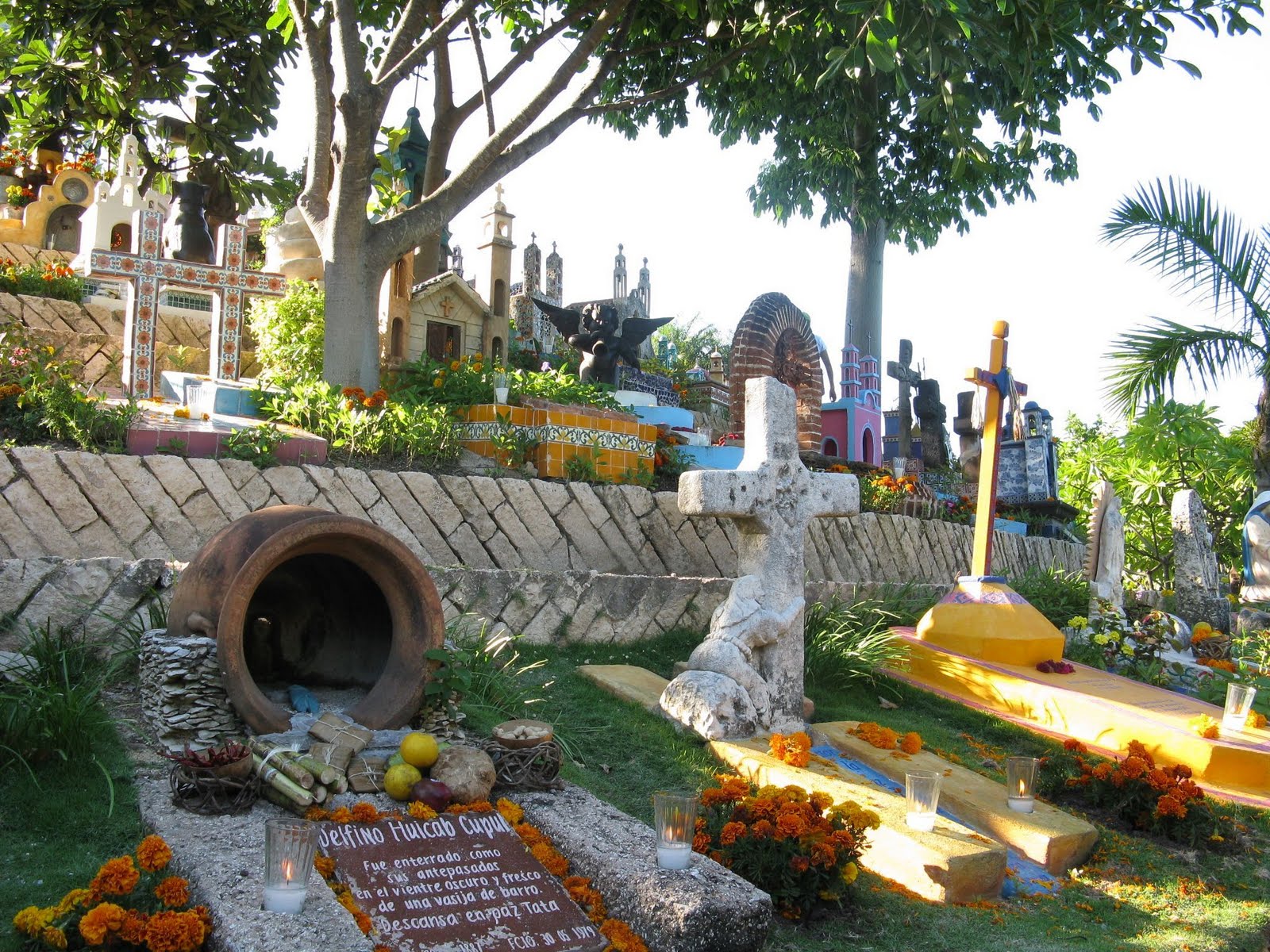

This tiered cemetery is set on seven levels representing the seven days of the week and contains 365 faux graves that reflect actual tombs and the amusing epitaphs found all around Mexico. During the Day of the Dead, anyone can place offerings and a photo of their loved one on any of the graves.

Xcaret offers a number of special workshops and displays for children to celebrate the Day of the Dead, and that includes a visit with a very evocative storyteller who goes under the guise of La Catrina, the signature Lady of the Dead, wearing her traditional upper class dress. She tells stories of the dead that captivate children and adults alike (including me).

Another Day of the Dead specialty is mucbi pollo in which a chicken dish that can be prepared different ways is cooked by burying in the ground. I was able to attend a private village ceremony in Coba where I watched the locals prepare the mucbi pollo almost like a chicken pot pie -- they made the pie of corn meal, wrap it in banana leaves and bury it in the ground along with hot coals. The burying is accompanied by music played on traditional percussion and wind instruments. The highlight was when it was uncovered two hours later, accompanied by a shaman who blessed the food and offered it to the spirits.